Total: €0,00
Taxes and shipping costs calculated at checkout


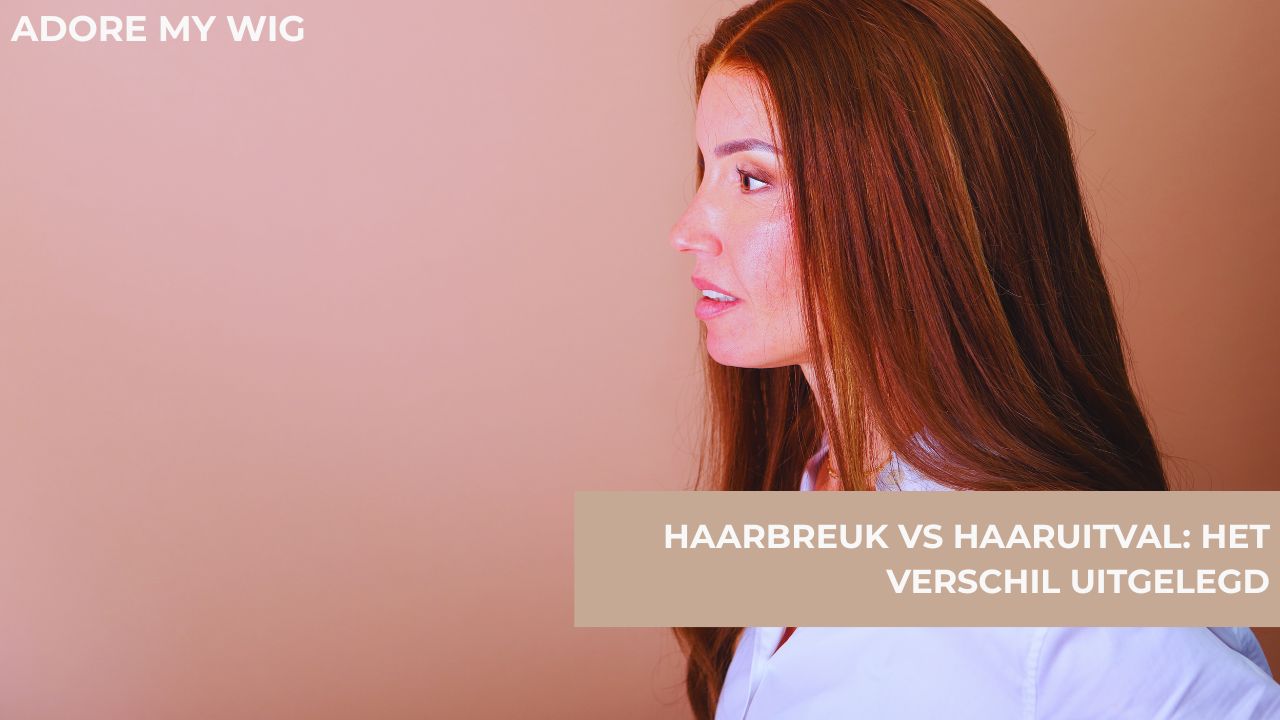
Hair breakage vs hair loss is a topic many women struggle with, precisely because the two problems are often confused. You see your hair getting thinner, feeling less full, or breaking faster — but what is really happening is not always clear. Yet the difference between hair breakage and hair loss is crucial to understand, because each problem has a completely different cause and therefore requires a completely different approach.
With hair breakage, the hair strand itself is damaged, causing the hair to break halfway and become shorter and more brittle. With hair loss, the hair detaches from the root, resulting in actually fewer hairs on your head. That distinction determines which products work, which routine helps, and which mistakes you might unknowingly make.
In this guide, we dive deep into the signs, causes, and differences between hair breakage vs hair loss, so you finally get clarity about what is happening with your hair — and especially: what you can do to improve it.
To clearly distinguish between hair breakage vs hair loss, it is important to know which signals belong to which problem. Many women think they are losing hair, while in reality it is broken hairs — or vice versa. The way your hair looks, where you find it, and how your hair feels says a lot.
Hair breakage is mainly recognized by the condition and length of the hairs you lose. The hair root does not detach; the hair breaks somewhere in the middle.
Typical signs of hair breakage:
These signs indicate that the hair fiber itself is damaged, not the hair root.
With hair loss, you lose entire hairs, including the small white bulb at the tip. That bulb is the hair root that has detached.
Typical signs of hair loss:
When these signals persist, it usually concerns an internal cause — hormonal, medical or stress-related.
Hair breakage and hair loss sometimes overlap, but the differences are decisive. Hair breakage requires protection, hydration and less mechanical damage. Hair loss requires balance in the hair cycle, hormones and nutrients. By recognizing the signals well, you prevent trying to solve the wrong problem.

When you understand which causes determine the difference between hair breakage vs hair loss, you can much faster discover what is happening beneath the surface of your hair health. Both problems can look the same on the outside, but the internal and external triggers differ completely.
Hair breakage occurs because the hair fiber itself weakens. The cuticle layer opens or gets damaged, making hairs vulnerable and easy to break halfway.
Common causes of hair breakage:
When this happens for a long time, your hair feels dry, brittle and uneven in length.
Hair loss actually starts in the root, where the hair cycle is disrupted. This causes a whole hair to fall out — not just the damaged lengths.
Causes often associated with hair loss:
Need more depth? Then also read our cluster page:
➡️ Why is my hair falling out? The most common causes
If you draw the wrong conclusion about hair breakage vs hair loss, you also choose the wrong approach. Hair breakage requires restoring the hair structure, while hair loss requires supporting the hair root and underlying health. By understanding the causes, you avoid frustration and immediately choose the solution that works.

Many women wonder whether they are dealing with hair breakage vs hair loss because the signals are sometimes subtle. Yet with a few simple observations during your daily routine, you can quickly discover which of the two is affecting you. It’s about what you see, where you see it, and how your hair feels.
The hairs you find in your brush, on your pillow, or in the shower provide a lot of information.
With hair breakage, you usually see short pieces without a white bulb.
With hair loss, it’s about long hairs with a white bulb at the end — a sign that the entire hair root has detached.
The place where you notice changes is often already an indicator.
Hair breakage mainly appears around the hairline, crown, bangs, and ends, because these areas endure the most stress.
Hair loss, on the other hand, is more noticeable at the roots, such as a wider parting or less density on top of the head.
Not the appearance but rather the texture sometimes says the most.
Dry, rough, or straw-like hair points more towards breakage.
When your hair feels normal but still has less volume, hair loss is often involved.
Uneven lengths, frayed ends, or many small broken hairs around the face signal hair breakage.
A transparent parting, a thinner ponytail, or spots where your scalp becomes more visible quickly are typical of hair loss.
During styling or curling, breakage becomes more noticeable: hairs snap off more easily and you see more loose pieces appearing.
With hair loss, you especially notice that a ponytail or bun feels less full, even if you don’t use styling tools.
By paying attention to this combination of signals, you quickly gain clarity about the difference between hair breakage vs hair loss and what exactly is happening with your hair.
Once you understand exactly what happens with hair breakage vs hair loss, it becomes much easier to choose the right approach. Both problems require a completely different strategy, but basically, it comes down to two pillars: protection of the hair fiber and support of the hair root.
When your hair mainly breaks in the lengths, recovery is mainly about care and protection.
Good steps to start with:
By strengthening the hair structure, the lengths break less easily and your hair gradually feels fuller again.
In hair loss, the cause often lies in the root, hormones, or health.
That’s why these steps help better:
Those who want to dive deeper into hormonal or internal causes can find more scientific background through this source:
➡️ https://www.healthline.com/health/hair-loss
If you notice that the signs of hair breakage vs hair loss persist for more than 3 to 6 months, a trichologist, dermatologist, or general practitioner can help identify hidden causes. Think of hormonal fluctuations, deficiencies, or stress factors that you might not easily recognize yourself.

Your hair tells a lot about what is happening in your body and in your routine. By understanding the differences between hair breakage and hair loss, you can take targeted steps, avoid disappointments, and see results faster. Whether you want to restore your hair structure, support your scalp, or regain your confidence — it all starts with clarity.